Table of Contents
ToggleThe MMORPG genre needs fresh MMORPG ideas. After decades of similar mechanics, many players feel fatigue from repeated formulas. Kill ten rats. Fetch the glowing orb. Grind for gear that becomes obsolete next patch.
But MMORPGs still hold massive potential. They offer shared worlds, social connections, and adventures that single-player games can’t match. The problem isn’t the genre itself, it’s a lack of innovation.
This article explores concrete MMORPG ideas that could push the genre forward. From new world concepts to player-driven systems, these suggestions aim to create experiences that feel genuinely new. Developers looking for inspiration and players dreaming about their ideal game will find practical concepts worth considering.
Key Takeaways
- Fresh MMORPG ideas like underwater civilizations, post-apocalyptic restoration, and microscopic worlds can revitalize the genre beyond traditional fantasy settings.
- Player-driven economies and governance systems create meaningful engagement by giving communities real control over markets, territories, and political structures.
- Dynamic quest systems that respond to world conditions and player choices solve the disconnect between heroic storylines and repetitive gameplay.
- Classless progression and physics-based combat offer exciting MMORPG ideas that reward experimentation over predictable class roles.
- Strong social features like mentorship programs, player-created content, and robust guild tools build communities that keep players engaged long-term.
- Non-combat roles such as diplomats, merchants, and builders deserve more attention to appeal to players who enjoy support-focused gameplay.
Innovative Setting and World Concepts
Fantasy settings dominate MMORPGs. Elves, dragons, and medieval kingdoms appear in countless titles. While these themes work, players crave variety.
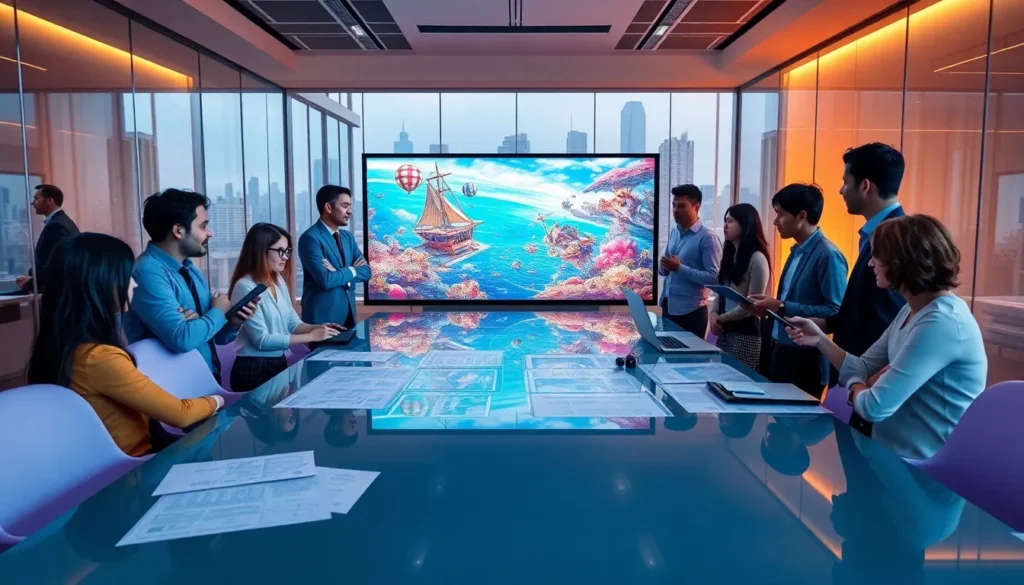
One promising MMORPG idea involves underwater civilizations. Picture vast ocean worlds where players build cities on the seafloor, tame aquatic creatures, and explore sunken ruins. The three-dimensional movement would create unique combat and exploration mechanics.
Another concept focuses on post-apocalyptic restoration rather than survival. Instead of scrounging for scraps, players would rebuild society. They’d construct farms, establish trade routes, and slowly reclaim a ruined world. Progress would feel meaningful because the environment would visibly transform.
Steampunk settings remain underexplored in MMORPGs. Airship battles, clockwork technology, and industrial cities offer visual and mechanical possibilities that standard fantasy ignores. Players could craft their own vehicles, modify them with unique parts, and engage in aerial PvP.
A microscopic world also presents interesting opportunities. Imagine shrinking players to insect size and placing them in a backyard ecosystem. Blades of grass become forests. Anthills become dungeons. This MMORPG idea would turn familiar environments into alien landscapes.
These settings work best when they influence gameplay, not just aesthetics. An underwater world should require different movement strategies. A post-apocalyptic setting should reward construction and cooperation.
Player-Driven Economy and Governance Systems
Most MMORPGs simulate economies without letting players control them. NPCs set prices. Developers decide what items exist. Players simply participate in pre-built systems.
Stronger MMORPG ideas give players actual economic power. True player-crafted economies would mean every item comes from player labor. No NPC shops selling weapons. No automatic resource spawns. Scarcity would create genuine value.
Guild governance systems could extend beyond simple leadership roles. Imagine guilds that function as actual governments. They’d set taxes, create laws, and manage territories. Other players would vote with their membership, joining guilds with policies they support.
Property ownership adds another layer. Players could own land, buildings, and businesses. A player might run an inn that other players actually use. Another might operate a forge that becomes famous for quality weapons. These MMORPG ideas create organic social structures.
Political systems could include elections, alliances, and even wars between player factions. The key is giving these choices real consequences. A poorly run territory should suffer. Good governance should attract population.
EVE Online demonstrates that players can handle complex economic and political systems. More MMORPGs should trust their communities with similar responsibility.
Dynamic Storytelling and Quest Design
Traditional MMORPG quests follow predictable patterns. Accept quest. Complete objective. Return for reward. Repeat indefinitely.
Better MMORPG ideas treat quests as living events. Dynamic quest systems would generate missions based on current world conditions. If wolves overpopulate an area, hunting quests appear. If a drought hits, players might need to find water sources.
Player-driven narratives take this further. Major story events could require community cooperation. A demon invasion might actually threaten cities unless players organize defenses. Failure would have permanent consequences, destroyed towns, lost NPCs, changed landscapes.
Branching storylines adapted from single-player games could work in MMORPGs. Different player choices would lead to different personal storylines. A player who helps bandits experiences different content than one who joins the city guard.
Procedural story generation offers another possibility. AI systems could create unique quest chains based on player history, location, and relationships. No two players would have identical experiences.
These MMORPG ideas require significant development investment. But they solve a fundamental problem: the disconnect between “save the world” storylines and gameplay where thousands of players complete the same “unique” heroic journey.
Combat and Class System Innovations
Class systems in MMORPGs rarely surprise anymore. Tank, healer, DPS, the trinity persists because it works. But working isn’t the same as exciting.
Classless progression systems let players build unique characters. Instead of choosing “warrior” at character creation, players would develop skills through use. Someone who fights with swords and studies magic becomes a spellsword naturally. These MMORPG ideas reward experimentation.
Physics-based combat could replace tab-targeting and cooldown rotations. Attacks would interact with environments. A fire spell near oil causes explosions. Knocking enemies off cliffs deals fall damage. Combat would require spatial awareness, not just button sequences.
Asymmetric classes add variety through specialization. One player might control a massive siege weapon. Another might lead a squad of NPC soldiers. A third might specialize in stealth and assassination. These roles would require teamwork while offering distinct experiences.
Combat pacing deserves reconsideration too. Not every fight needs to last thirty seconds. Some encounters could be brief and lethal. Others might span hours as epic boss battles. Varying the rhythm keeps combat fresh.
Non-combat classes represent another underused MMORPG idea. Diplomats, merchants, and builders could advance without ever fighting. Games like Star Wars Galaxies showed that players enjoy support roles when those roles matter.
Community and Social Features Worth Exploring
MMORPGs succeed or fail based on their communities. Yet many games treat social features as afterthoughts.
Mentorship systems could formalize how experienced players help newcomers. Veterans would receive rewards for teaching new players. Beginners would gain guidance and faster progression. Both groups benefit.
Player-created content expands what’s possible. Quest editors, dungeon builders, and event tools let communities extend the game themselves. The best player creations could become official content.
Cross-game identity systems would let reputation follow players between MMORPGs. A player known for helpfulness in one game would carry that reputation elsewhere. This MMORPG idea encourages positive behavior.
In-game social spaces deserve more attention. Taverns, marketplaces, and gathering halls should encourage interaction. Mini-games, performances, and casual activities give players reasons to socialize beyond grinding.
Guild tools often lack ambition. Better MMORPG ideas include guild halls that players construct, internal economies, and progression systems separate from individual advancement. Guilds should feel like persistent organizations, not just chat channels with permissions.
These features recognize that many players value social connections as much as gameplay. Building strong communities keeps players engaged longer than content updates alone.