
Table of Contents
TogglePlayStation is Sony’s flagship gaming brand and one of the most recognized names in the video game industry. Since its debut in 1994, PlayStation has shaped how millions of people play games at home. The brand includes gaming consoles, online services, and exclusive titles that have defined generations of gaming. This guide covers everything you need to know about PlayStation, from its origins to its current offerings. Whether someone is new to gaming or a longtime fan, understanding what PlayStation offers helps explain why it remains a dominant force in entertainment.
Key Takeaways
- PlayStation is Sony’s flagship gaming brand that has shaped home gaming since its 1994 debut in Japan.
- The PlayStation 2 remains the best-selling game console of all time with over 155 million units sold worldwide.
- PlayStation Network connects over 100 million monthly active users and offers tiered subscription services through PlayStation Plus.
- Exclusive games like God of War, The Last of Us, and Spider-Man define PlayStation’s identity and attract dedicated fans.
- The PlayStation 5 features cutting-edge technology including a custom SSD, ray tracing graphics, and the innovative DualSense controller with haptic feedback.
The History of PlayStation
Sony launched the original PlayStation in Japan on December 3, 1994. The console arrived in North America the following year and quickly became a phenomenon. But here’s the interesting part: PlayStation almost never existed.
The story begins with a failed partnership. Sony and Nintendo collaborated on a CD-ROM add-on for the Super Nintendo in the early 1990s. When Nintendo backed out of the deal, Sony decided to develop its own console instead. That decision changed gaming history.
The first PlayStation sold over 100 million units worldwide. It introduced CD-based games to a mass audience, offering larger storage capacity than cartridges. This allowed developers to create games with better graphics, full soundtracks, and cinematic storytelling.
PlayStation also changed gaming culture. It targeted older audiences with mature titles and positioned gaming as mainstream entertainment. Sony’s marketing emphasized lifestyle and cool factor, not just gameplay. This approach attracted millions of new players who had never owned a console before.
By the late 1990s, PlayStation had become the best-selling console of its generation. Sony had transformed from an electronics company into a gaming giant.
PlayStation Console Generations
Sony has released five main PlayStation console generations, each building on the success of the last.
PlayStation (PS1) – 1994
The original PlayStation brought CD-based gaming to the mainstream. It introduced iconic franchises like Final Fantasy VII, Metal Gear Solid, and Crash Bandicoot. The PS1 established Sony as a serious competitor in the gaming market.
PlayStation 2 (PS2) – 2000
The PS2 remains the best-selling game console of all time with over 155 million units sold. It played DVDs, which helped drive adoption. The library featured thousands of games, including Grand Theft Auto, Kingdom Hearts, and God of War. Many consider the PS2 era to be gaming’s golden age.
PlayStation 3 (PS3) – 2006
The PS3 introduced Blu-ray disc support and high-definition gaming. Its launch price was controversial, $599 for the top model, but Sony eventually recovered. The console also introduced PlayStation Network for online gaming. Notable exclusives included The Last of Us and Uncharted.
PlayStation 4 (PS4) – 2013
Sony learned from PS3 mistakes and launched the PS4 with a lower price and developer-friendly architecture. The PS4 sold over 117 million units and dominated its generation. Games like God of War, Spider-Man, and Horizon Zero Dawn showcased PlayStation’s exclusive lineup.
PlayStation 5 (PS5) – 2020
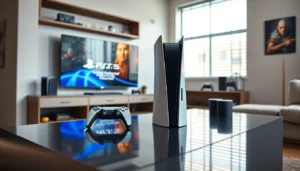
The current generation PlayStation features a custom SSD for near-instant loading times, ray tracing graphics, and the DualSense controller with haptic feedback. Even though early supply shortages, the PS5 has become one of Sony’s fastest-selling consoles. PlayStation continues to push hardware boundaries with each new generation.
PlayStation Network and Online Services
PlayStation Network (PSN) launched in 2006 alongside the PS3. It serves as Sony’s online platform for multiplayer gaming, digital purchases, and streaming content. Today, PSN connects over 100 million monthly active users worldwide.
The network offers several service tiers:
PlayStation Plus is Sony’s premium subscription service. Members get access to online multiplayer, monthly free games, cloud storage for saves, and exclusive discounts. In 2022, Sony restructured PlayStation Plus into three tiers, Essential, Extra, and Premium, each offering different benefits.
PlayStation Store is the digital marketplace where users purchase games, DLC, and media content. Digital game sales now account for the majority of PlayStation software revenue.
PlayStation Now (now merged into PlayStation Plus Premium) offered game streaming and downloads from a library of older titles. This service allowed players to access PS2, PS3, and PS4 games without owning the original discs.
PlayStation also supports cross-platform features for select games, letting players compete with friends on other systems. The network’s social features include friends lists, messaging, party chat, and trophy tracking.
Security remains a priority after a major breach in 2011 temporarily shut down PSN. Sony has since invested heavily in protecting user data and maintaining service reliability.
Popular PlayStation Exclusive Games
Exclusive games define PlayStation’s identity. These titles only appear on PlayStation consoles and give players a reason to choose the platform.
God of War reimagined Kratos as a father figure in Norse mythology. The 2018 reboot won Game of the Year and proved PlayStation exclusives could compete with any game in the industry.
The Last of Us tells an emotional story about survival in a post-apocalyptic world. Both the original and its sequel received critical acclaim. The franchise spawned a hit HBO television series.
Spider-Man by Insomniac Games delivered the superhero experience fans had wanted for years. Swinging through New York City felt incredible, and the game sold over 50 million copies across both titles.
Horizon Zero Dawn introduced Aloy, a hunter in a world where robotic creatures roam. The game combined open-world exploration with compelling combat and mystery.
Uncharted brought cinematic action-adventure gaming to PlayStation. Nathan Drake’s treasure-hunting escapades defined the PS3 and PS4 eras.
These exclusives show why PlayStation continues to attract dedicated fans. Sony invests heavily in first-party studios to create experiences players can’t find elsewhere.