Table of Contents
ToggleMMORPG trends 2026 point toward a major shift in how players experience online worlds. Developers are moving away from cookie-cutter designs and embracing fresh ideas that change how stories unfold, how economies work, and how communities form. The genre has matured, and so have player expectations.
This year promises smarter NPCs, seamless cross-platform play, and economies where players hold real ownership. Combat systems are getting creative overhauls, and smaller games are finding loyal audiences by serving specific player interests. Here’s what MMORPG fans should watch for in 2026.
Key Takeaways
- MMORPG trends 2026 highlight AI-driven NPCs that remember player interactions and deliver dynamic, personalized storytelling.
- Cross-platform play is now an industry standard, allowing PC, console, and mobile players to share servers and strengthen communities.
- Player-owned economies are gaining traction, letting gamers trade assets and earn real value from their in-game investments.
- Niche MMORPGs with smaller, dedicated communities are thriving by focusing on specific playstyles and sustainable business models.
- Combat systems are evolving beyond tab-targeting, with action-based mechanics and horizontal progression keeping gameplay fresh for years.
- MMORPG trends 2026 signal a genre shift toward accessibility, player agency, and worlds that feel alive rather than scripted.
AI-Driven NPCs and Dynamic Storytelling
Artificial intelligence is reshaping MMORPG trends 2026 in ways that feel genuinely new. NPCs no longer stand in place waiting to hand out quests. They remember past interactions, react to world events, and hold conversations that adapt to player choices.
Several upcoming titles use large language models to power NPC dialogue. This means players can ask questions, negotiate, or even lie, and NPCs respond accordingly. A merchant might offer better prices to a player who helped defend their village. A quest-giver might refuse to work with someone who betrayed their faction.
Dynamic storytelling takes this further. Instead of fixed narratives, game worlds generate events based on collective player behavior. If players ignore a growing threat, it spreads. If they band together, they shape the outcome. This creates stories that feel personal and unpredictable.
The technology isn’t perfect yet. Some AI responses still miss the mark, and server costs remain high. But the direction is clear. MMORPG trends 2026 favor worlds that feel alive and responsive rather than scripted and static.
Cross-Platform Play Becomes the Standard
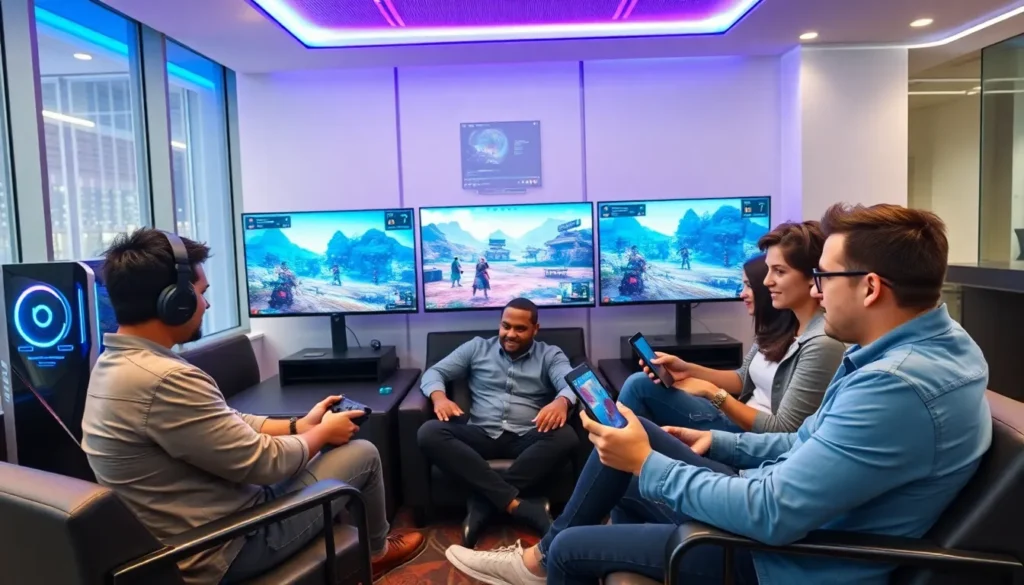
Cross-platform play has moved from a nice feature to an expectation. MMORPG trends 2026 show that players demand the ability to group with friends regardless of device. PC, console, and mobile players increasingly share the same servers.
This shift solves a long-standing problem. MMORPGs need healthy populations to thrive. Splitting players across platforms fragments communities and shortens game lifespans. Unified servers keep populations strong and queue times short.
Technical challenges remain. Balancing gameplay between a mouse-and-keyboard user and a touchscreen player requires careful design. Some developers use separate input modes or adjust aim assist. Others design systems that work equally well across all control schemes.
Cloud gaming adds another layer. Services like Xbox Cloud Gaming and NVIDIA GeForce Now let players jump into MMORPGs from almost any device. A player might raid on their PC at home and check auctions from their phone during lunch.
The result? MMORPG trends 2026 favor accessibility. Games that lock players to single platforms risk losing out to competitors who don’t.
The Rise of Player-Owned Economies
Player-owned economies represent one of the most debated MMORPG trends 2026 has brought forward. Some games now let players truly own in-game assets. They can trade items outside the game, sell accounts legally, or earn real money from their time investment.
This isn’t about hype or speculation. It’s about changing how value works in virtual worlds. Traditional MMORPGs keep all assets locked within their ecosystem. Players spend hundreds of hours earning gear that holds zero value outside the game.
New models flip this. Players who craft rare items or build successful in-game businesses can cash out. Some games use blockchain technology to verify ownership. Others simply allow sanctioned real-money trading through official marketplaces.
Critics raise valid concerns. Pay-to-win dynamics can ruin competitive balance. Speculation can distort in-game economies. Some early attempts crashed badly when player interest dropped.
Yet demand persists. Many players want their time to hold tangible value. MMORPG trends 2026 suggest developers will keep experimenting, though the successful implementations will balance player ownership with fair gameplay.
Smaller Scale and Niche Community Focus
Not every MMORPG needs millions of players. MMORPG trends 2026 show growing interest in smaller games that serve specific communities well.
These niche titles focus on particular playstyles or themes. A game might center entirely on crafting and trade. Another might appeal to hardcore PvP players who want constant danger. Some target fans of specific settings, steampunk, cosmic horror, or historical fantasy.
Smaller scale offers advantages. Developers can respond faster to feedback. Communities become tighter and more invested. Toxicity gets easier to manage when everyone knows each other.
The business model shifts too. Instead of chasing free-to-play masses, some developers charge subscriptions or one-time purchases to dedicated fans. Lower player counts mean lower server costs. A game with 50,000 loyal subscribers can thrive where a free-to-play title with the same numbers would fail.
MMORPG trends 2026 suggest the genre is splitting. Massive blockbusters will still exist. But alongside them, smaller games will carve out sustainable spaces for players who want something different.
Evolving Combat and Progression Systems
Combat systems in MMORPGs have grown stale. Tab-targeting and hotbar rotations dominated for decades. MMORPG trends 2026 push developers toward more engaging alternatives.
Action combat continues gaining ground. Players aim attacks, dodge in real time, and position themselves carefully. Hitboxes matter. Timing matters. Skill expression goes beyond knowing the optimal rotation.
Some games blend approaches. They keep the strategic depth of cooldown management while adding action elements. A player might choose abilities from a hotbar but aim them manually and dodge incoming attacks.
Progression systems are changing too. Vertical progression, where players chase ever-higher numbers, creates problems. Old content becomes irrelevant. New players face daunting catch-up grinds. Power gaps make grouping difficult.
Horizontal progression offers an alternative. Instead of getting stronger, players gain new options. A max-level character from year one stays relevant alongside a new player. MMORPG trends 2026 show more games testing this approach.
Other experiments include seasonal resets, skill-based matchmaking that ignores gear, and content that scales to player power. The goal stays consistent: keep gameplay engaging for years without invalidating past effort.