Table of Contents
ToggleLearning how to PlayStation starts the moment you open that box. Whether it’s a PS5 or PS4, the setup process is straightforward when you know what to expect. This guide walks through every step, from connecting cables to downloading your first game. New users will find everything they need to get gaming within minutes. Veterans switching consoles can use this as a quick refresher. Let’s get that PlayStation running.
Key Takeaways
- Learning how to PlayStation begins with connecting your console to a TV via HDMI, plugging in the power cord, and pairing your controller through USB.
- Create a PlayStation Network (PSN) account to access online gaming, the PlayStation Store, and cloud saves—enable two-factor authentication for security.
- Navigate the home screen using the Control Center (PS5) or horizontal menu (PS4) to access games, apps, settings, and downloads quickly.
- Download games from the PlayStation Store or install from physical discs, and use a wired Ethernet connection for faster download speeds.
- Optimize your experience by enabling Rest Mode downloads, calibrating HDR settings, and setting up Remote Play for gaming on the go.
- A PlayStation Plus subscription unlocks online multiplayer and monthly free games, though free-to-play titles don’t require it.
Unboxing and Connecting Your PlayStation
Every PlayStation box contains the console, a DualSense or DualShock controller, an HDMI cable, a power cord, and a USB charging cable. Some regions include additional items like headsets or game vouchers.
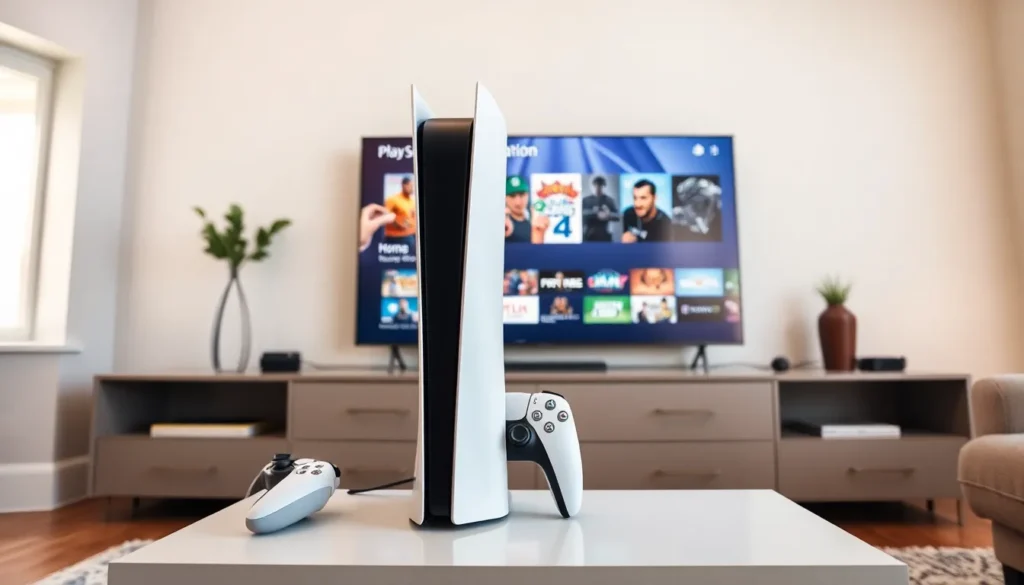
Start by placing the console on a flat, stable surface. The PS5 works vertically or horizontally, use the included stand for either position. The PS4 sits flat without extra support.
Connect the HDMI cable from the console’s HDMI OUT port to your TV. Plug the power cord into the back of the PlayStation and into a wall outlet. Avoid power strips when possible: direct connections provide more stable power.
Press the power button on the console. The PS5’s button sits near the disc drive (or centered on Digital Edition models). The PS4 has its power button on the front face.
Once powered on, the console prompts users to connect a controller. Plug the USB cable into the controller and the front USB port on the PlayStation. Press the PS button in the center of the controller. The light bar illuminates, confirming the connection.
The initial setup wizard appears on screen. Select your language, connect to Wi-Fi, and accept the user agreement. These first steps take about five minutes for most users.
Creating a PlayStation Network Account
A PlayStation Network (PSN) account opens access to online gaming, the PlayStation Store, and cloud saves. Users can create one directly on the console or through Sony’s website beforehand.
On the console, select “Create Account” when prompted. Enter a valid email address, this becomes the account’s primary recovery method. Choose a strong password with letters, numbers, and symbols.
Next, create an Online ID. This username appears to other players and in game lobbies. Pick carefully: changing it later costs money after the first free change. Sony rejects inappropriate names, so keep it clean.
Users must verify their age during signup. Those under 18 need a parent or guardian to create a family account first. The adult account holder controls spending limits, playtime restrictions, and communication settings for child accounts.
After account creation, the system asks about two-factor authentication. Enable it. This security layer requires a mobile verification code for sign-ins from new devices. It prevents unauthorized access even if someone learns the password.
A PlayStation Plus subscription adds online multiplayer, monthly free games, and exclusive discounts. It’s optional but valuable for anyone planning to play with friends online. Three tiers exist: Essential, Extra, and Premium, each with different benefits and price points.
Navigating the PlayStation Home Screen
The PlayStation home screen organizes everything into clear sections. The PS5 uses a card-based interface called the Control Center. The PS4 displays a horizontal menu with icons for each function.
Games appear on the main row. Recently played titles show first, with the full library accessible through the Game Library icon. Apps like Netflix, YouTube, and Spotify sit in their own section.
The Control Center opens by pressing the PS button once. This overlay shows active downloads, friend activity, notifications, and quick settings. Users can adjust volume, check battery life, and switch audio output without leaving their game.
Holding the PS button brings up the power menu. Options include Rest Mode (low-power standby), turning off the console, and restarting.
The Settings icon (gear symbol) lives in the top-right corner. From here, users access network settings, storage management, controller options, and parental controls. Spend a few minutes exploring these menus early, it saves confusion later.
The PlayStation Store icon connects to Sony’s digital marketplace. Browse new releases, sales, and free-to-play games without leaving the console.
Downloading Games and Apps
The PlayStation Store offers thousands of games and apps. Users browse by genre, price, or popularity. Sales happen regularly, with major discounts during seasonal events.
To purchase a game, select it and choose “Add to Cart” or “Buy Now.” Payment methods include credit cards, PayPal, and PlayStation Store gift cards. After purchase, the download begins automatically.
Download speeds depend on internet connection quality. A wired Ethernet connection typically delivers faster speeds than Wi-Fi. Users can pause and resume downloads from the Control Center.
The PS5’s SSD installs games quickly, often under an hour for large titles. The PS4’s hard drive takes longer. Both consoles allow gameplay while downloads complete in the background, though some games require full installation first.
Free-to-play games like Fortnite, Apex Legends, and Rocket League don’t require PlayStation Plus for online play. Paid games with multiplayer features typically need an active subscription.
Users can also install games from physical discs. Insert the disc, wait for the system to recognize it, and follow the installation prompts. The disc must remain in the drive to play disc-based games.
To manage storage, visit Settings > Storage. Delete old games, move content to external USB drives (PS4 games only on external storage for PS5), or archive games to reinstall later.
Essential Settings and Tips for New Users
A few quick adjustments improve the PlayStation experience significantly.
Enable Rest Mode Downloads: In Settings > System > Power Saving, allow the console to stay connected to the internet during Rest Mode. Games and updates download while the console sleeps.
Adjust HDR Settings: For HDR-compatible TVs, run the HDR calibration tool in Settings > Screen and Video. Proper calibration makes colors pop and shadows look natural.
Customize Controller Settings: Change button assignments, vibration intensity, and trigger effects in Settings > Accessories > Controllers. Some users prefer lighter trigger resistance for faster shooting in games.
Set Up Remote Play: The PlayStation app on phones, tablets, and PCs allows streaming games from the console. Enable Remote Play in Settings > System > Remote Play. It’s useful for gaming away from the TV.
Manage Notifications: Reduce distractions by adjusting notification settings. Turn off pop-ups for things like friend activity or promotional messages.
Create Custom Game Lists: Organize the library by creating folders. Group games by genre, completion status, or whatever makes sense. It keeps the home screen tidy.
Check for Updates Regularly: System software updates add features and fix bugs. Enable automatic updates or check manually in Settings > System > System Software.